
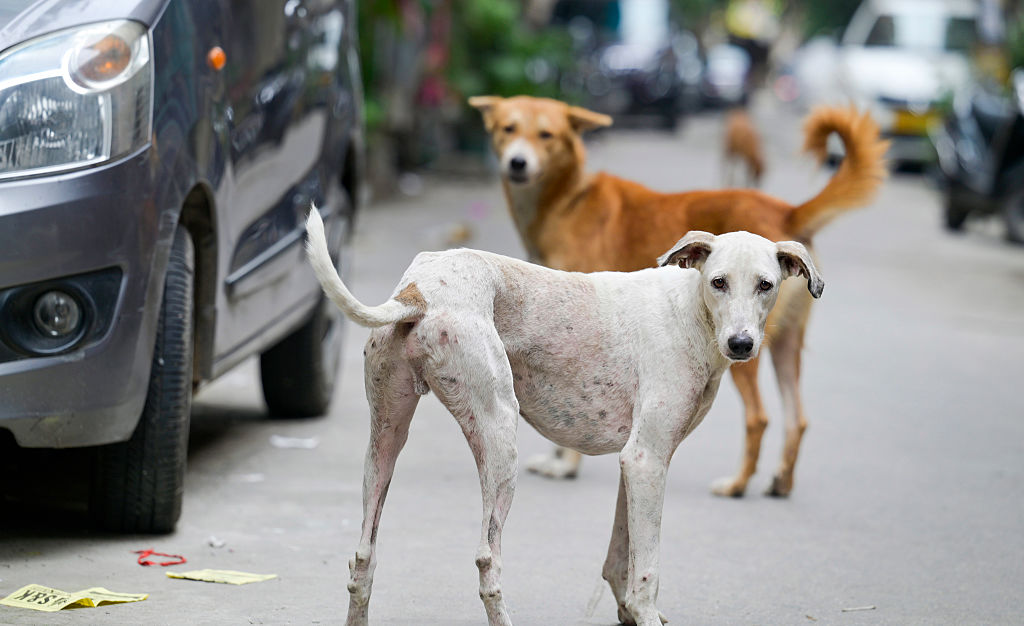
NEW DELHI: In a decisive move aimed at prioritizing public safety, the Supreme Court on Tuesday firmly refused to modify its November 2025 order, reaffirming its directive to remove stray dogs from public institutions across the country.
A three-judge bench comprising Justices Vikram Nath, Sandeep Mehta, and NV Anjaria emphasized that the constitutional right to live with dignity inherently includes freedom from the persistent threat of stray dog attacks, warning that the state “cannot remain a passive spectator” to the growing nationwide crisis.
Public Spaces Must Be Free From Fear
The apex court’s ruling comes amid a sharp rise in dog-bite incidents nationwide. The justices particularly highlighted the vulnerability of citizens, noting that children, the elderly, and international travelers have increasingly become frequent victims of stray dog attacks.
To address this, the court’s landmark November 2025 order remains strictly in force. That directive mandates:
- The immediate removal of stray dogs from educational institutions, medical facilities, and transit hubs.
- A strict prohibition on releasing captured dogs back into the same institutional areas.
- The mandatory fencing of premises to prevent re-entry and ensure long-term public safety.
While prioritizing human safety, the bench also focused on systemic, humane population control. The Supreme Court instructed all state governments to aggressively strengthen the implementation of the Animal Welfare Board of India (AWBI) rules.
Key Directive: Every single district across India must establish at least one fully functional Animal Birth Control (ABC) centre, with further infrastructure expansion to be scaled according to local population density.
Cracking Down on Highway Hazards: Stray Cattle
Extending its scanner beyond urban stray dogs, the Supreme Court took serious note of the safety hazards on India’s transport lifelines.
The bench directed the National Highways Authority of India (NHAI) to urgently tackle the menace of stray cattle on highways. The NHAI has been tasked with setting up a dedicated monitoring framework and deploying depreciated transport vehicles to safely clear cattle from high-speed corridors.
Strict Accountability and Deadlines
To ensure that these directives do not just remain on paper, the Supreme Court has instituted a strict, time-bound compliance and monitoring mechanism.
First, all State High Courts have been instructed to immediately register suo motu (independent) cases to actively monitor progress within their jurisdictions.
Following this, State Chief Secretaries and the Union Government must submit comprehensive compliance reports to their respective jurisdictional High Courts by August 7, 2026.
Finally, these High Courts are required to file consolidated progress reports with the Supreme Court by November 17, 2026.
The Supreme Court confirmed that the matter now stands closed before the apex court, except for the review of these mandatory compliance reports later this year. The firm stance marks a significant judicial intervention aimed at reclaiming public spaces and safeguarding citizens’ fundamental right to move without fear.












Leave a comment