
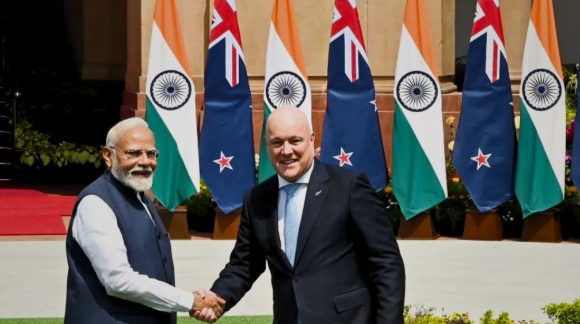
In a move that signals India’s rising stature in the global economic landscape, Prime Minister Narendra Modi and New Zealand Prime Minister Christopher Luxon have officially announced the India-New Zealand Free Trade Agreement (FTA). This landmark pact, the seventh negotiated by the Modi government and the third major trade deal concluded in 2025 alone, represents a strategic leap in trade diplomacy aimed at creating jobs and fostering transformative opportunities for millions.
A Boost for Indian Exports and Employment
The core of this agreement is built on market access. New Zealand has committed to providing zero-duty access to 100% of Indian exports. This is a massive win for India’s labor-intensive sectors, including:
- Textiles and Apparel
- Gems and Jewelry
- Leather and Footwear
- Engineering Goods
- Handicrafts and Marine Products
By removing these trade barriers, the FTA directly empowers Indian artisans, MSMEs, and women entrepreneurs, ensuring their products reach international shelves with a competitive edge.
Empowering Professionals and Students
Beyond goods, the FTA opens doors for human capital. The agreement includes a structured framework for:
- STEM Graduates: Can now work in New Zealand for up to three years.
- Doctoral Scholars: Eligibility for work for up to four years.
- Temporary Employment Entry Visas: New pathways for skilled Indian professionals.
- Working-Holiday Visas: Providing youth with unprecedented global exposure.
Protecting the Roots: Agriculture and Dairy
While expanding trade, the Indian government has maintained a “farmers first” approach. Crucially, sensitive sectors such as rice, dairy, wheat, and soya remain fully protected, with no market openings that could harm domestic livelihoods.
To enhance productivity, an Agricultural Productivity Partnership has been established, focusing on high-value crops like apples, kiwi, and honey, while New Zealand has committed to GI-level protection for Indian Basmati rice.
A Historic Milestone: India’s First Women-Led FTA
In a proud moment for Indian diplomacy, this agreement marks the nation’s first women-led FTA. Almost the entire negotiating team—from the chief negotiator to leads for investment and services—was comprised of women. This reflects the central role of women in the Prime Minister’s development agenda and India’s commitment to inclusive growth.
Investment-Linked Growth
New Zealand has committed to a Foreign Direct Investment (FDI) target of USD 20 billion over the next 15 years. This investment mirrors the innovative “investment-linked” provisions seen in India’s recent pacts with EFTA countries (Switzerland, Norway, Iceland, and Liechtenstein). Much of this capital will be directed toward:
- Agriculture and Dairy technology
- Education and Sports
- MSME development
This FTA is a testament to India’s journey from being labeled among the “Fragile Five” in 2014 to becoming a preferred global investment partner in 2025. By balancing national interests with global integration, India is demonstrating that trade can be human-centric, delivering shared prosperity from farms to factories.













Leave a comment