
What Is Karam Puja?
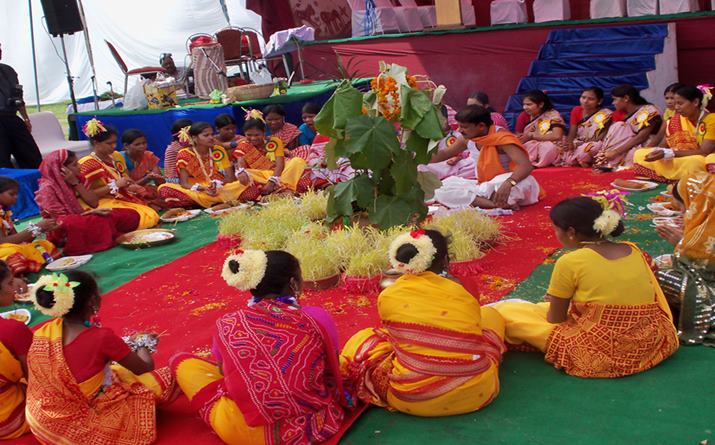
Karam Puja is a vibrant tribal festival celebrated primarily by the adivasi communities across Assam, Jharkhand, Chhattisgarh, Madhya Pradesh, Odisha, and West Bengal. At the heart of the festival is the Karam or Karam tree, worshipped as a symbol of Karam Devta—the God of youth, power, and fertility.
The festival is deeply connected to agriculture and nature, symbolizing honest labor and prayers for bountiful harvests. By the time of Karam Puja, sowing is almost complete, and people pray for nature’s mercy to bless their crops. Tribals also worship Karam Rani, the Goddess of wealth, seeking prosperity and welfare for their families.
Who Celebrates Karam Festival?
Karam Puja is an integral festival for many tribal groups, including Baiga, Oraon, Binjhwari, Munda, Majhwar, Ho, Khortha, and Korba communities. While some regions like Jharkhand focus on worshipping Mother Nature, in Assam, the emphasis is on Karam Devta for prosperity and a harmonious conjugal life.
The festival also celebrates values such as friendship, sisterhood, brotherhood, and cultural unity, underlining community welfare.
Rituals and Traditions
Preparations for Karam Puja begin a week prior to the main day. Fresh sand is collected from riverbeds and sown with seven different seeds—including rice, barley, maize, wheat, gram, horse gram, and lentil—symbolizing fertility and growth.
Three branches of the Karam tree are planted in courtyards or village community centers (akhra). These branches symbolize various trinities: Brahma, Vishnu, and Mahesh; the sky, earth, and the world beneath; and the past, present, and future.
On the day of the festival, sisters worship the Karam branches and seek long life and prosperity for their brothers. The deity, Karma Gosai, is worshipped with heartfelt devotion. In agricultural fields, branches of the Bhelwa tree (Semecarpus anacardium) are placed to protect crops from pests.
Importance and Cultural Significance
Karam Puja marks an auspicious period; following it, marriages are often fixed. The festival fosters social bonding through customs like Sahiya, a tradition of friendship and mutual support within communities that strengthens ties across generations.
Historically, the festival is also seen as a symbol of victory, with tales of tribes hiding in Karam tree forests from enemies during battles.
A popular legend tells of seven brothers who angered Karam Devta by uprooting the Karam tree, only to suffer losses and starvation until they sought forgiveness through worship.
Living Tradition
Today, Karam Puja remains a powerful expression of indigenous identity, faith, and reverence for nature. Its rituals, songs, and dances preserve cultural memory and foster community solidarity. Celebrated with enthusiasm across various states, Karam Puja continues to remind people of their inseparable bond with the earth, the cycles of agriculture, and the enduring strength of tribal traditions.













Leave a comment