
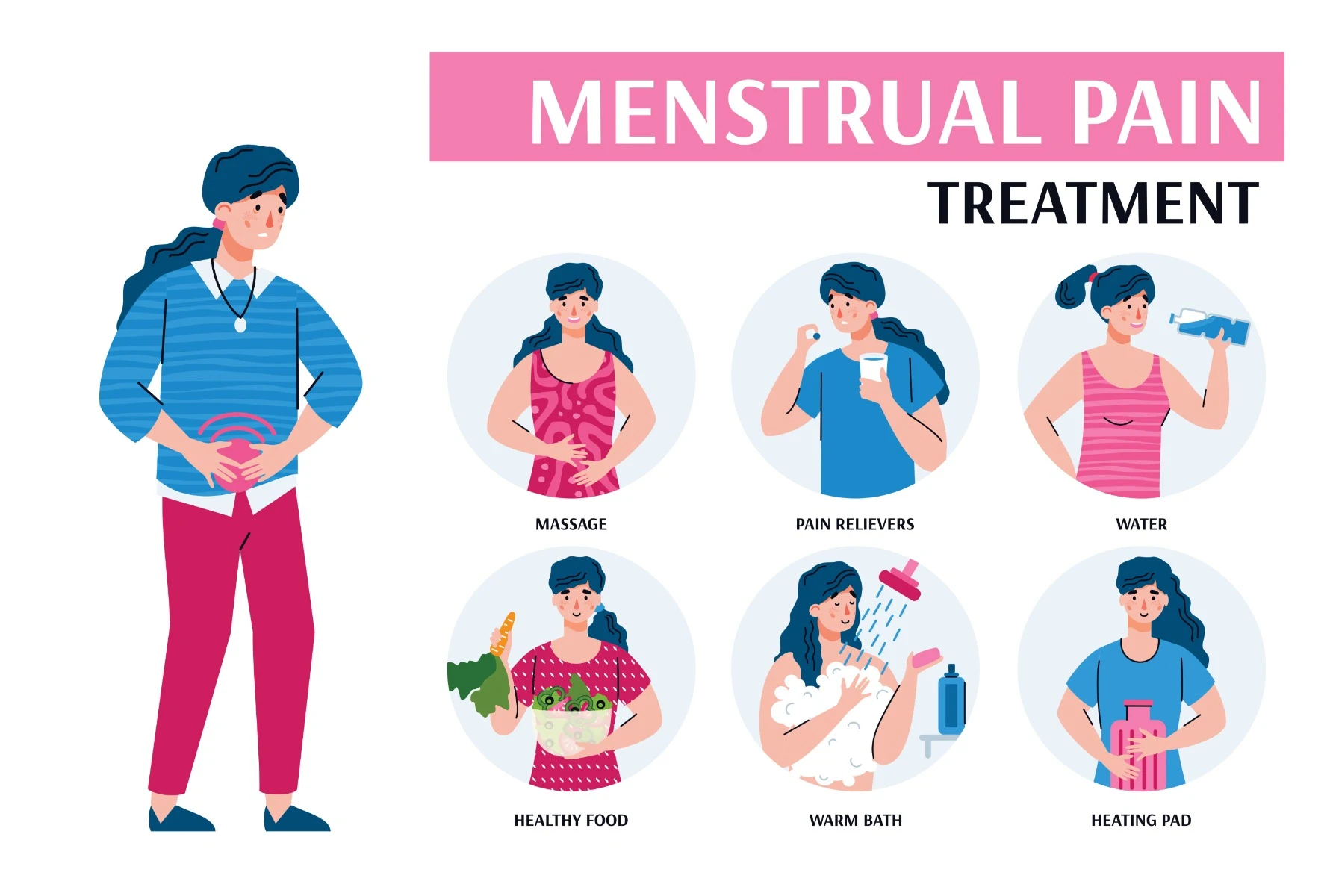
Menstrual pain (dysmenorrhea) is a monthly struggle for many, but relief doesn’t always have to come from a pharmacy! Before reaching for painkillers, try these effective, comforting, and easy-to-implement home remedies
1- Heat Therapy – Your Best Frien
- The Remedy: Apply heat to your lower abdomen and back.
- How it Works: Heat helps relax the contracting uterine muscles, which are the main cause of the cramps. It also increases blood flow.
- Quick Fix: Use a heating pad, a hot water bottle, or even take a warm bath for 15-20 minutes.
2- Ginger Power – The Anti-Inflammatory Spice
- The Remedy: Drink ginger tea.
- How it Works: Ginger is a natural analgesic (pain reliever) and has strong anti-inflammatory properties, which can help reduce the levels of pain-causing prostaglandins in the body.
- Recipe Tip: Grate a small piece of fresh ginger (about 1 inch), boil it in a cup of water for 5-7 minutes, strain, and add a touch of honey or lemon for taste.
3- Hydration is Key – Drink More Water
- The Remedy: Increase your daily water intake.
- How it Works: Dehydration can worsen muscle cramps, including menstrual ones. Staying well-hydrated helps reduce bloating and fluid retention, which can alleviate abdominal pressure and pain.
- Pro Tip: Carry a water bottle with you and aim for at least eight 8-oz glasses a day. Warm water or herbal teas are particularly soothing.
4- Gentle Movement – Activate Natural Painkillers
- The Remedy: Engage in light exercise or gentle stretching.
- How it Works: Exercise stimulates the release of endorphins, which are your body’s natural pain-relieving chemicals. It also helps relax muscles.
- Try This: A brisk walk, a session of gentle yoga (like Child’s Pose or Cat-Cow), or simple stretching for 15 minutes. Avoid intense, strenuous workouts.
5- Herbal Teas – Soothing & Antispasmodic
- The Remedy: Sip on specific herbal infusions.
- How it Works: Certain herbs have antispasmodic compounds that can reduce muscle spasms in the uterus and offer anti-inflammatory benefits.
- Include:
- Chamomile Tea: For its calming and antispasmodic effects.
- Cinnamon Tea: For its anti-inflammatory properties that may help improve blood flow.
- Fennel Seed Tea: A traditional remedy known for reducing uterine muscle spasms.
Limit or Avoid
These foods and drinks can worsen bloating, inflammation, and pain:
- Caffeine: Can constrict blood vessels and increase uterine tension.
- Salty Foods: Can increase water retention and bloating.
- Alcohol: Can contribute to dehydration and inflammation.
- Highly Processed/Fatty Foods: Can increase inflammation in the body.














Leave a comment