
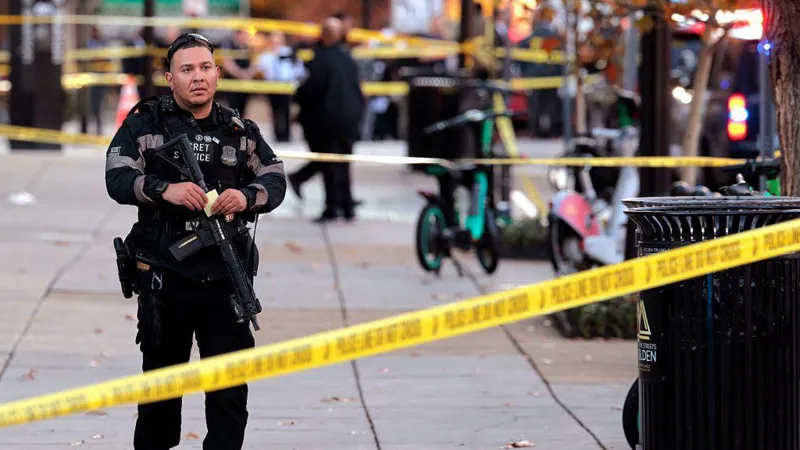
WASHINGTON D.C. – The everyday bustle of the nation’s capital was shattered Wednesday afternoon by a sudden, brutal act of violence just blocks from the White House. Two National Guard soldiers on a high-visibility patrol young men far from their homes, now symbols of a shocking national security breach were shot in a brazen, daylight ambush. Both are now fighting for their lives in critical condition.
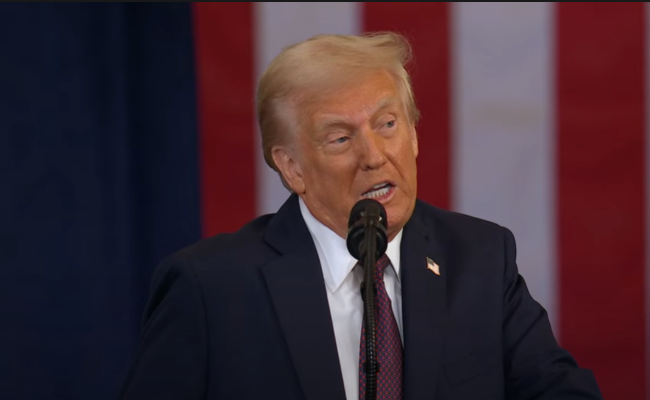
The sheer audacity of the attack instantly rippled through the city and across the country. President Donald Trump, visibly shaken yet resolute, swiftly condemned the act, calling it an act of terror. His immediate response was a promise of swift justice and, critically, an instant, sweeping halt to all Afghan immigration processing, throwing a political grenade into an already volatile debate.
The Moment of Violence
The chaos erupted around 2:15 p.m. EST at the busy intersection of 17th and I Streets NW—a place normally filled with office workers grabbing lunch and commuters hurrying through Farragut Square. The victims, members of the West Virginia National Guard, were there as part of a mission to help combat crime in the district.
Metropolitan Police Assistant Chief Jeff Carroll described a terrifying scene: the two soldiers were “ambushed” by a lone gunman who appeared suddenly and immediately opened fire. In a moment of pure, raw heroism, other Guardsmen nearby didn’t hesitate; they rushed toward the sound of the gunfire, tackling and subduing the attacker. The suspect, later identified as Rahmanullah Lakamal, was also wounded and is now in custody.
“This was a brazen, horrendous act of violence,” said FBI Director Kash Patel, underscoring the gravity of the attack on uniformed servicemen doing their duty.
The Suspect and the Policy Firestorm
The incident transformed from a horrific local crime into a national security crisis when the alleged gunman was identified: Rahmanullah Lakamal, an Afghan national who entered the U.S. in 2021 under the Operation Allies Welcome program.
The revelation acted like a spark on dry tinder. President Trump, speaking from Florida, delivered an impassioned address, declaring the shooting “an act of evil, an act of hatred and an act of terror.” He immediately weaponized the suspect’s immigration status, leveling fierce criticism at the vetting processes of the previous administration. Homeland Security Secretary Kristi Noem followed with a sharply partisan statement, reigniting the contentious debate over the Operation Allies Welcome program, which she claimed “let in thousands of unvetted Afghan nationals.”
Policy Shockwave: Afghan Immigration Halted
The most immediate, devastating consequence was the policy shockwave that followed the President’s words.
In a late-night video address, President Trump declared: “We must now re-examine every alien who has entered our country from Afghanistan under [the previous administration].”
Within hours, US Citizenship and Immigration Services (USCIS) announced it had frozen all processing of Afghan immigration requests. The human cost of this freeze the families waiting, the lives hanging in the balance is now immense.
In an additional show of force, Defense Secretary Pete Hegseth announced an immediate surge of 500 additional National Guard troops to Washington D.C., cementing the military’s controversial, heightened presence in the nation’s capital.
Law enforcement is tirelessly working to uncover the motive for this “targeted shooting,” but the emotional, political, and policy damage has already been done. Two soldiers are in critical condition, and the future of thousands of Afghan immigrants in the U.S. has been thrown into immediate, chaotic uncertainty.








Leave a comment