

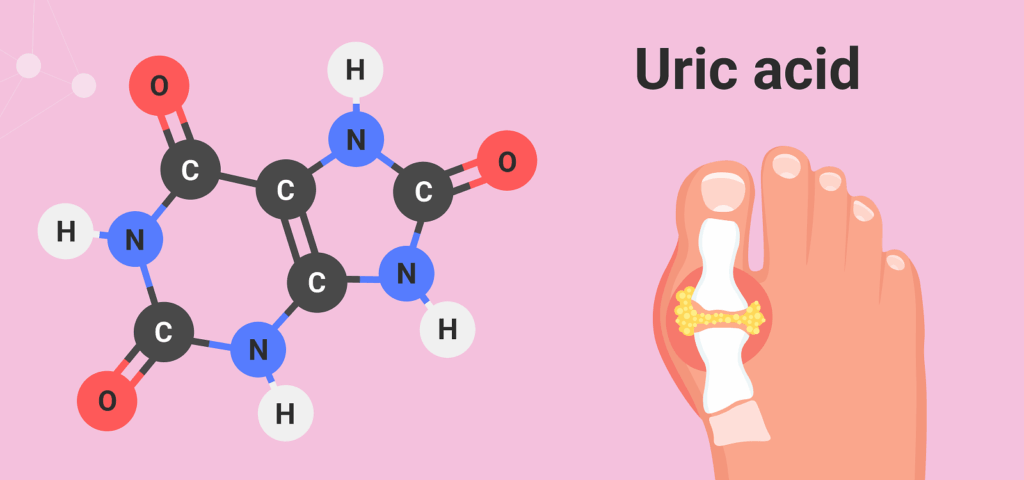
Uric acid is a natural waste product formed from the breakdown of compounds called purines in the body, and high levels can lead to serious health issues like gout and kidney stones if left untreated. Symptoms often go unnoticed until complications arise, making it important to understand this condition for effective management and prevention.
Symptoms
Most people with high uric acid do not experience symptoms until it triggers other issues such as gout or kidney stones.
Symptoms of gout:
- Sudden severe joint pain, especially in the big toe, ankles, and knees
- Swelling, redness, and warmth in affected joints
- Difficulty moving the joint and joint stiffness
Symptoms of uric acid kidney stones:
- Sharp pain in the back, abdomen, or groin
- Pain or burning sensation during urination
- Blood in the urine (hematuria)
- Increased urge to urinate and foul-smelling urine
- Nausea and vomiting (in some cases)
Causes
High levels of uric acid can be caused by:
1. Eating purine-rich foods like red meat, organ meats, seafood, beans, peas, and mushrooms
2. Excessive alcohol consumption
Treatment
1. Managing high uric acid generally involves:
2. Dietary changes to limit purine-rich foods and alcohol
3.Drinking plenty of water to help flush out uric acid through urine
4.Maintaining a healthy weight and treating underlying conditions like kidney disease or hypothyroidism
5. Medications, such as allopurinol or febuxostat, that lower uric acid levels for those with recurrent gout or severe symptoms
6. Pain relief medications for gout attacks and supportive care for kidney stones
7. Medical attention is recommended if symptoms like severe joint pain or kidney stone pain occur, as untreated high uric acid can lead to permanent joint damage or other serious health problems.












Leave a comment